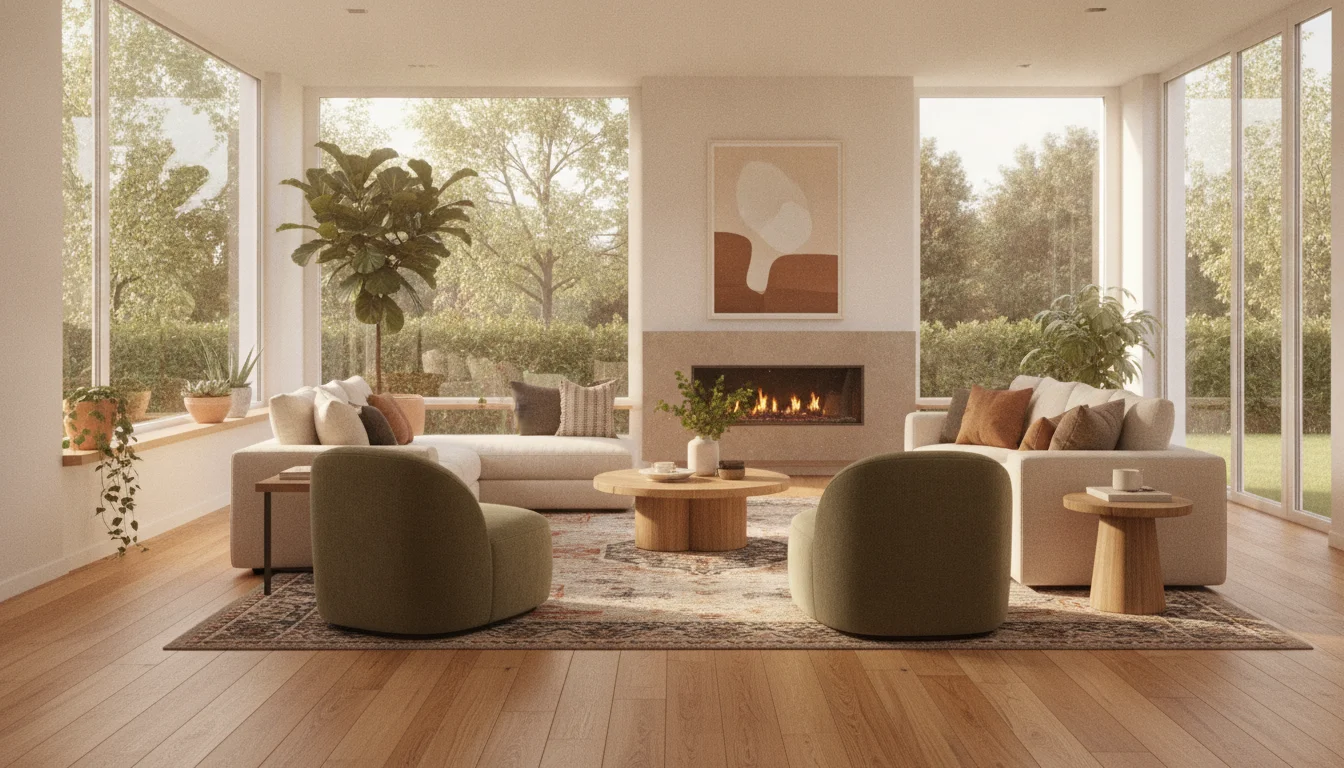
Yes. The right system heats through your floor in winter and cools through quiet air handlers in summer on one refrigerant platform, so you skip a separate AC.
Short answer: yes. A single, well-designed system can heat your home through the floor in winter and cool it in summer, on one refrigerant platform, so you do not need a separate air-conditioning system bolted on later. The important nuance is how the cooling is delivered: heating comes up through the floor you walk on, but cooling is delivered by discreet, ultra-quiet indoor air handlers rather than by chilling the floor itself. That distinction is not a compromise. It is exactly what lets the system manage humidity correctly and keep your floor dry. Here is how it works, and why doing it this way is the honest, durable answer.
Can radiant floor heating actually cool a house?
It depends on what you mean by "cool." In a modern setup, the same heat pump that warms your floor in winter reverses in summer to remove heat from the house. So the cooling and the heating genuinely run off one system. What changes is the delivery method. Winter warmth radiates up from the floor, which is where you want it. Summer cooling is sent out through slim indoor air handlers placed where it is needed, because that is the right tool for the job in cooling mode.
You may have read that you can run chilled water (or chilled refrigerant) through the floor loops to cool through the floor directly. It is technically possible, but it carries a real problem that affects comfort and the building itself, which is the next question every careful homeowner asks.
Why isn't the cooling delivered through the floor too?
Because a cold floor sweats. When you chill a surface below the room's dew point, moisture in the air condenses on it, exactly the way a glass of iced tea beads up on a summer afternoon. Cool a floor that way and you can end up with a literally damp, slippery surface, and over time, trapped moisture under rugs, in flooring seams, or in the slab. In humid stretches of the year, that is not a rare edge case. It is the predictable result of cooling a floor below dew point.
There is a second issue: a chilled floor does almost nothing about humidity. It lowers air temperature slowly while the air stays muggy, so the room can read the right number on the thermostat and still feel clammy. Air handlers solve both problems at once. As they cool, they also wring moisture out of the air and drain it away, so the house feels genuinely dry and comfortable, not just a few degrees cooler. Delivering cooling through air handlers is the deliberate, correct choice, not a shortcut.
So do I still need a separate AC system?
No, and that is the whole point. The usual luxury-home story is two mechanical systems competing for budget and space: radiant or hydronic heat for winter, plus a separate central air-conditioning system added on for summer, often with its own outdoor condenser, its own ductwork, and its own thermostat fighting the first one.
A one-system approach replaces that. A single inverter heat pump outside drives both jobs: refrigerant into the floor loops for heating, and the same platform feeding indoor air handlers for cooling. One outdoor unit. One coordinated set of controls. One system to design, install, and maintain instead of two that were never meant to talk to each other. For most homeowners, the appeal is less about any single feature and more about not owning, paying for, and servicing two separate machines for the life of the house.
The two-system arrangement also tends to cost you twice in ways that are easy to overlook at the planning stage. Two outdoor units mean two things to find space for and screen from view. Two control systems mean two thermostats that can disagree, leaving a room that is technically heated and cooled at the same time. And two pieces of equipment mean two service contracts, two sets of filters and refrigerant checks, and two clocks counting down toward replacement. Consolidating onto one platform removes that duplication, which is why the question "do I need a separate AC" is worth answering before the walls and floors are closed up, not after.
How does one system heat and cool a whole home?
The heart of it is an inverter-driven heat pump, which moves heat rather than burning fuel. In winter, it pulls heat from outside air and sends it as warmth into the floor. In summer, it runs in reverse, pulling heat out of the house and rejecting it outdoors, with the indoor air handlers doing the actual room-by-room cooling and dehumidifying.
Because it is one coordinated platform, the seasonal handoff is built in rather than improvised. You set a comfortable target, and the system holds the house steady, warm and draft-free in winter, cool and dry in summer, with rated temperature stability of about ±1°F in zones designed for it. Indoor air handlers can run as quiet as roughly 20 dB(A), quieter than most libraries, so the comfort stays in the background where it belongs. And because heating and cooling are not two appliances cycling against each other, you avoid the on-off lurching you can feel and hear with mismatched equipment.
Can the same system make hot water too?
It can. In a triple-function configuration, the same heat pump that heats your floor and cools your home also produces domestic hot water. That folds a third appliance into the platform: instead of a furnace or boiler, a separate AC, and a separate water heater, one outdoor unit covers heating, cooling, and hot water. It is optional, not required, but for homeowners building or renovating from scratch it is often the most efficient way to consolidate the mechanical room and the running costs that come with it.
Is one system right for every home?
Honest answer: the consolidation makes the most sense when you are building new or undertaking a major renovation, because the floor loops and air-handler placement are designed in from the start rather than retrofitted around existing equipment. It is an excellent fit for cold-climate luxury homes that still need real summer cooling, and for multi-zone homes where different rooms hold different setpoints. If you already have a recent, well-matched heating and cooling setup you are happy with, the case is weaker. The strongest reason to go one-system is the one most owners care about: designing once and owning one coordinated system, instead of stitching two together over the years.
If you are weighing whether to put radiant heat in and add cooling later, the cleaner path is usually to plan for both from the beginning. You can see how heating, cooling, and hot water work on one system, and if you want to understand the heating side specifically, our overview of waterless radiant floor heating explains how the floor warms without water in it. When you are ready, a short conversation about your floor plan and climate is the fastest way to know what configuration fits your home.
Related reading
Frequently Asked Questions
Can radiant floor heating cool my house in summer?
Yes, but not by chilling the floor. The same heat pump that warms your floor in winter reverses in summer and delivers cooling through discreet indoor air handlers. You get true cooling and proper humidity control from one platform, without the downsides of trying to cool through the floor surface.
Will the floor get cold or sweat in cooling mode?
No, because the floor is not used for cooling. Chilling a floor below the room's dew point causes condensation, a literally damp, sweating surface, which is the classic problem with floor-based cooling in humid weather. Delivering cooling through air handlers keeps the floor dry and removes humidity from the air at the same time.
Do I still need a separate air-conditioning system?
No. A single inverter heat pump handles both jobs: radiant heating through the floor and cooling through matched air handlers, all off one outdoor unit and one set of controls. That replaces the usual arrangement of radiant heat plus a separate, bolted-on AC system.
Can the same system also make hot water?
Yes, in a triple-function configuration. The same heat pump that heats your floor and cools your home can also produce domestic hot water, consolidating heating, cooling, and hot water onto one refrigerant platform instead of three separate appliances.