Radiant floor heating installation typically runs about $10-$30 per sq ft installed in 2026, depending on system type. Here is the honest cost breakdown.
In 2026, industry guides typically report radiant floor heating installation at roughly $10 to $30 per square foot installed, which works out to about $1,500 for a small bathroom and $20,000 to $48,000-plus for a whole 2,000-square-foot home. The wide range is not vague pricing; it reflects a real fork in the road. Electric mat systems sit at the lower end and suit small rooms, while hydronic and premium whole-home systems sit at the higher end because they heat an entire house and involve more equipment and labor. What you actually pay depends most on which system type you choose and whether it is going into new construction or an existing home.
Below we break down installation cost by system type, what it works out to per square foot, the factors that genuinely move the number, and how upfront cost relates to what you will pay to run the system for decades. Wherever we cite a figure, it is an industry-reported range, not a quote for any one home, because the only honest installation number is a tailored one based on your actual project.
How much does radiant floor heating cost by system type?
"Radiant floor heating" is a category, not a single product. There are three broad approaches, and they sit at very different price points because they do very different jobs.
- Electric mat or cable systems. Industry guides typically report electric radiant at roughly $8 to $15 per square foot installed for the heating element and labor, before the new floor finish on top. These are thin resistance mats or cables, ideal for a single bathroom or kitchen. They are the cheapest to install because the area is small and the equipment is simple, but they are expensive to run at whole-home scale, so they are best kept to small spaces.
- Hydronic (water-based) systems. Hydronic radiant pumps heated water through tubing under the floor and is the traditional choice for whole homes. Industry guides typically report installed costs of roughly $6 to $20 per square foot for the radiant portion, but the total climbs once you add the heat source, manifolds, pumps, and controls. A boiler or heat pump, buffer tank, and circulating pumps add several thousand dollars on their own. It is more affordable per square foot than electric for large areas, but it is mechanically complex and brings the water-related risks of leaks, freezing, and scaling.
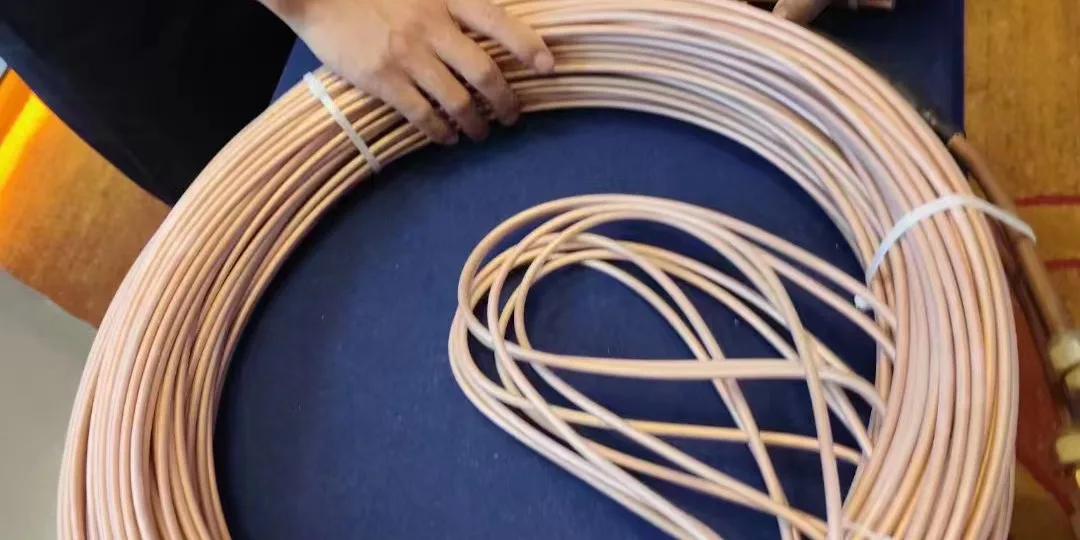
- Waterless DX radiant. This is a premium, whole-home approach in which refrigerant flows directly through a thin, weld-free copper loop beneath the floor, with no boiler, buffer tank, circulating pump, or antifreeze anywhere in the system. Because it is engineered as a complete home comfort platform rather than an off-the-shelf kit, it is priced per project rather than by a published per-square-foot sticker. It fits new builds and full renovations best. For a tailored figure, the right step is a project-specific quote rather than a number pulled from a generic chart.
The takeaway: electric is the budget option for small rooms, hydronic is the conventional whole-home option, and waterless DX is the quiet-luxury whole-home option that trades a published sticker price for a tailored design. You can read how the waterless approach works in our overview of waterless radiant floor heating.
What is the cost of radiant floor heating per square foot?
Per square foot is how most homeowners compare systems, so here is the honest picture for 2026. Industry guides typically report the following installed ranges, including the heating system and labor but usually not the finished flooring on top:
- Electric radiant: about $8 to $15 per square foot installed.
- Hydronic radiant: about $6 to $20 per square foot installed for the radiant portion, with the heat source and controls added on top.
- Blended whole-home figure: many guides cite a general $10 to $30 per square foot range when averaging system types and project conditions.
Per-square-foot math is useful for a ballpark, but it hides two things. First, fixed costs (the heat source, controls, and setup) are spread across the whole project, so a larger home often has a lower effective per-square-foot cost than a single small room. Second, the per-square-foot figure rarely includes the new floor finish, subfloor prep, or electrical upgrades, which can be a meaningful share of the total. Treat per-square-foot as a starting frame, not a final answer.
What actually drives radiant floor heating installation cost?
Two homes can get the same system and pay very different totals. These are the factors that move the number most:
- Heated area. More square footage means more material and labor, though the per-square-foot rate often drops as fixed costs spread out. This is usually the single biggest lever.
- New construction vs. retrofit. Installing radiant in a new build, before the floor is finished, is far cheaper than retrofitting an existing home, where the old floor has to come up first. Retrofit adds demolition, disposal, and a new floor finish to the budget. Our guide on adding radiant to an existing home covers this in depth.
- Floor type and finish. Tile and stone pair beautifully with radiant but are costly to lay; engineered wood and other finishes carry their own labor rates. The finished floor is often a separate line item from the heating system itself.
- Subfloor and structural prep. Leveling, reinforcing, or building up a subfloor adds cost. Height changes can also mean trimming doors and resetting baseboards in a retrofit.
- Heat source and controls. The boiler or heat pump, manifolds, zoning, and smart thermostats are a major part of any whole-home system. More zones and smarter controls cost more upfront but improve comfort and running efficiency.
- Labor and region. Skilled installation labor varies by market, and complex layouts (many rooms, irregular spaces) take more time. Labor is frequently 40 to 60 percent of an installed radiant project.
Notice how many of these have nothing to do with the heating element itself. The floor finish, subfloor prep, and whether you are tearing out an existing floor often matter as much as the radiant system you pick.
Should I compare upfront cost or lifetime cost?
Installation is a one-time number; running cost is forever. Comparing systems on upfront price alone can be misleading, because the cheapest system to install is not always the cheapest to own.
Electric mat radiant is inexpensive to install but, at a Coefficient of Performance (COP) near 1.0, it is expensive to run at whole-home scale, so a low upfront cost can be erased by high monthly bills over years. Heat-pump-driven radiant costs more to install but moves heat rather than burning electricity to make it, reaching a COP well above 1, which can dramatically lower running cost over the life of the home. We break this down fully in our guide to cold-climate heat-pump performance and in our companion article on whether radiant floor heating is expensive to run.
The honest way to compare is total cost of ownership: installation plus decades of running cost, factoring in your electricity rate, climate, and how well your home is insulated. A premium whole-home system that runs efficiently and lasts can win on lifetime cost even when it loses on the sticker, especially in a home you plan to keep.
How do I budget for radiant floor heating in 2026?
A realistic budget separates the heating system from everything around it. A practical way to think it through:
- Define the scope honestly. One bathroom is a small electric job; a whole 2,000-square-foot home is a major system. The scope sets the order of magnitude before anything else.
- Budget the system and the floor separately. The radiant system, the heat source and controls, and the finished flooring are distinct line items. Per-square-foot quotes often cover only the first.
- Account for new-build vs. retrofit. If you are retrofitting, add demolition, disposal, and a new floor to your estimate. If you are building or doing a full renovation, radiant is far cheaper to fold in now than later.
- Plan for the heat source. For whole-home systems, the heat pump or boiler, zoning, and controls are a substantial share of the total, not an afterthought.
- Weigh lifetime cost, not just upfront. Set your budget against decades of running cost, not only the install invoice.
For small single-room comfort, an electric mat keeps the budget modest. For whole-home comfort you intend to live with for years, budget for an efficient heat-pump-driven system and judge it on total cost of ownership.
How do I get an accurate radiant floor heating quote?
No chart can price your specific home, because the real number depends on your square footage, your floor finish, whether you are building or retrofitting, your climate, and your controls. The ranges above are useful for orientation, but an accurate figure comes from a designer who has looked at your actual project.
To get a quote you can trust, be ready to share: the rooms or whole-home area you want heated, whether it is new construction or a renovation, your preferred floor finishes, your climate and insulation level, and how many zones you want. With those inputs, a designer can size the system, specify the heat source, and give you a real installed figure rather than a generic per-square-foot estimate.
This is exactly why a premium waterless DX system is priced per project. Rather than publish a one-size-fits-all sticker that would be wrong for most homes, the better path is a tailored design. If a new build or major renovation is on your horizon and you want even, draft-free, heat-pump-efficient warmth without a drop of water in the floor, explore our waterless radiant floor heating overview, then request a quote built around your home.
Related reading
Frequently Asked Questions
How much does it cost to install radiant floor heating in 2026?
Industry guides typically report about $10 to $30 per square foot installed in 2026, depending on system type. That is roughly $1,500 for a small bathroom with an electric mat, or about $20,000 to $48,000-plus for a whole 2,000-square-foot home. Electric systems sit at the low end and suit small rooms; whole-home hydronic and premium waterless systems sit higher. Your actual cost depends on area, system type, and whether it is a new build or a retrofit.
Is electric or hydronic radiant floor heating cheaper to install?
Electric mat systems are cheaper to install for small areas, with industry guides typically reporting about $8 to $15 per square foot. Hydronic systems run roughly $6 to $20 per square foot for the radiant portion but become more cost-effective per square foot over large, whole-home areas because the fixed cost of the heat source spreads out. Electric is best for one room; hydronic is the conventional whole-home choice. Note that electric is cheaper to install but costlier to run at scale.
How much does radiant floor heating cost per square foot?
Industry guides typically report about $8 to $15 per square foot installed for electric radiant and roughly $6 to $20 per square foot for the hydronic radiant portion, with many sources citing a blended $10 to $30 per square foot range across system types. These figures usually cover the heating system and labor but not the finished floor on top, subfloor prep, or electrical upgrades, so treat per-square-foot as a starting frame rather than a final number.
Why is radiant floor heating more expensive to retrofit than to install in a new home?
Radiant heat lives under the finished floor, so retrofitting an existing home means taking up the old floor first, which adds demolition, disposal, and a new floor finish to the budget. In new construction, the system is embedded before the floor is ever finished, so there is no tear-out. This is why radiant is far cheaper to fold into a new build or a full renovation than to add to a finished, untouched floor.
How can I get an accurate radiant floor heating installation quote?
An accurate quote comes from a designer reviewing your specific project, not from a generic chart. Be ready to share the area you want heated, whether it is new construction or a renovation, your floor finishes, your climate and insulation, and how many zones you want. Premium whole-home systems like waterless DX radiant are priced per project for this reason, so a tailored quote will be more reliable than any published per-square-foot figure.