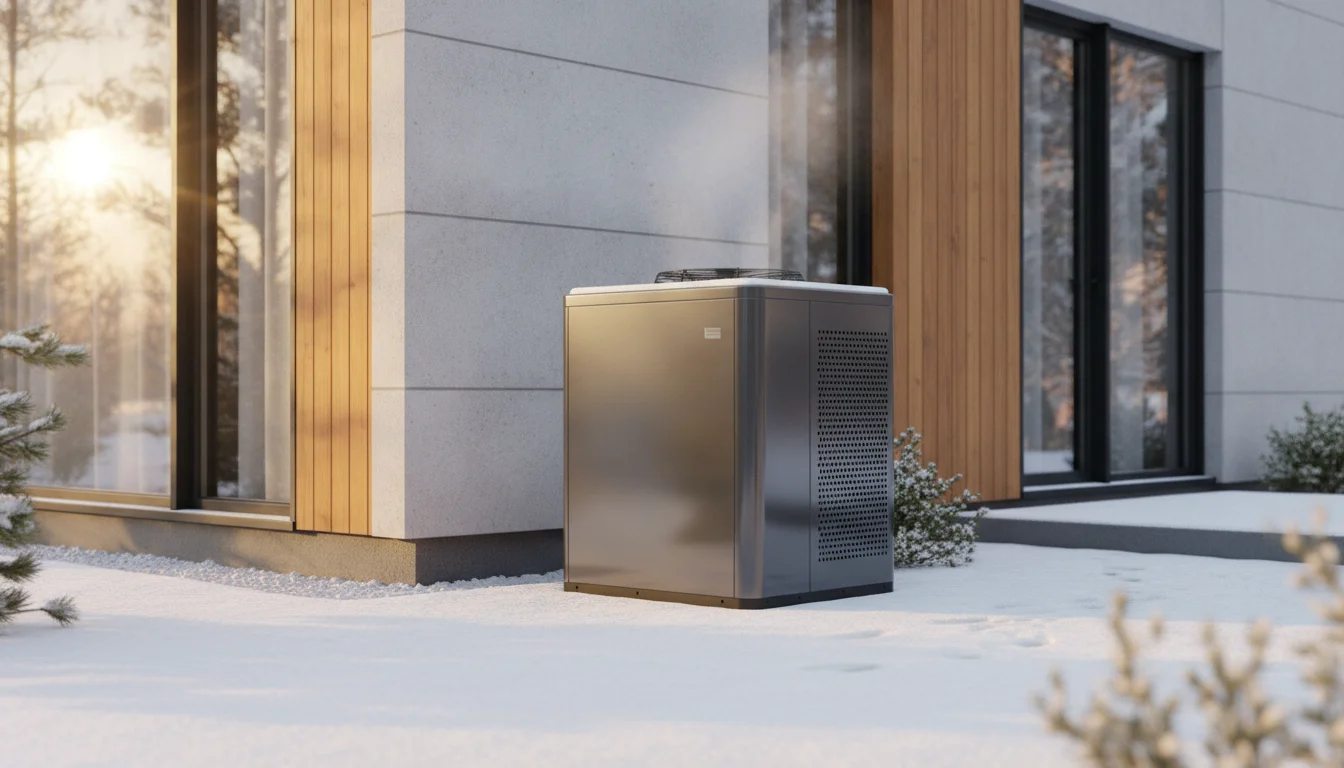
Yes, well-designed radiant heat works through a deep freeze. Here is how to size it right, why waterless floors can't freeze-burst, and where backup belongs.
Yes, a properly designed radiant heating system will keep your home warm through an extreme cold snap. The two things that decide whether it holds up are honest sizing for your climate's coldest hours and what is actually running through your floor. A waterless radiant system has no liquid in the floor loops to freeze and burst, and when it is matched to a cold-climate heat pump that is rated to keep extracting heat far below zero, the system carries the house through nearly the entire winter on its own.
Below we walk through the real questions homeowners ask before a hard winter: whether radiant can freeze, how a heat pump behaves when it is genuinely brutal outside, and how to design in backup the right way without overspending.
Can Radiant Heat Freeze During a Deep Freeze?
This is the question that keeps people up at night, and it depends entirely on what is inside the floor. Traditional hydronic radiant runs heated water or a water-glycol mix through PEX tubing embedded in the slab. If that water sits still during a power outage or an unheated stretch in subfreezing weather, it can freeze, expand, and split the tubing inside the concrete. Repairing a burst loop buried in a finished floor is expensive and disruptive.
A waterless radiant floor removes that risk at the source. Instead of circulating water, it carries refrigerant directly through copper loops embedded in the floor. There is no water in the floor to freeze, so there is nothing to burst when the temperature drops. You also skip the glycol that hydronic owners in cold climates add for freeze protection, which slightly reduces a water system's heat transfer. If you want the deeper comparison, see how a waterless radiant floor differs from a water-based one.
The short version: a hydronic floor needs active protection to survive a deep freeze, while a waterless floor has nothing in it to freeze in the first place.
How Do Heat Pumps Perform When It Is Well Below Zero?
Older heat pumps earned a reputation for quitting in the cold, and that reputation no longer fits modern cold-climate equipment. A well-engineered inverter heat pump uses a variable-speed compressor plus enhanced vapor injection to keep pulling usable heat out of frigid outdoor air, even when it feels like there is no warmth left to find. Our cold-climate heat-pump platform is rated to operate in heating mode down to −31 °F and holds its full rated heating capacity all the way down to 5 °F.
That 5 °F threshold matters more than the headline number. In most cold-climate homes, the vast majority of winter hours sit above 5 °F, which means the system delivers full strength through almost the entire season with no drop-off. Efficiency does taper gradually as it gets colder, because that is physics, but a strong platform tapers gently and still moves far more heat than it consumes.
Radiant is also the ideal partner for a heat pump. A low-temperature radiant floor only needs a modest supply temperature, which is exactly where a heat pump runs most efficiently. High-temperature emitters force a heat pump to work against its strengths, while a radiant floor lets it stay in its efficient range.
Do I Still Need Backup Heat for the Coldest Nights?
Here is the honest answer most marketing avoids: for a handful of genuinely brutal hours each winter, at the very bottom of the temperature range, a well-designed system should have right-sized supplemental heat ready to engage. We design that backup in on purpose rather than pretending it is never needed.
This is not a sign of weakness in the system. It is smart engineering. Sizing the entire system around the single coldest hour of a decade would mean oversizing, overspending, and running inefficiently for the other 99 percent of winter. Instead, the heat pump carries the house through the overwhelming majority of cold weather, and a modest backup stage covers the rare extremes seamlessly. You stay warm on the worst night of the year by design, not by luck.
What backup looks like depends on the home and the climate zone. The point is that it is sized and integrated deliberately, so it kicks in only when truly needed and stays out of the way the rest of the season.
How Should a Cold-Climate Radiant System Be Designed?
Performance in extreme cold is decided at the design stage, not on the coldest night. A few principles separate a system that struggles from one that just works:
- Size to your actual climate zone and envelope. A system designed for a mild region will fall short in mountain or northern winters. Load calculations should reflect your local design temperature, insulation, windows, and air sealing, not a generic nationwide spec.
- Insulate beneath and around the floor. Rigid foam under the slab creates a thermal break from the cold ground, so the heat you generate radiates up into the room instead of leaking down. This single detail has an outsized effect on comfort and efficiency.
- Choose a low-temperature emitter. A radiant floor running at modest supply temperatures keeps a heat pump in its efficient zone and delivers gentle, even, draft-free warmth.
- Design backup deliberately. Right-size supplemental heat for the peak hours and integrate controls so the transition is seamless and rare.
- Eliminate freeze and burst risk where you can. A waterless floor has no liquid in the loops, removing a whole category of cold-weather failure.
Get these right and a deep freeze becomes a non-event. The system runs, the floor stays warm, and you are not watching the forecast wondering whether the heat will hold.
What Happens During a Power Outage in Freezing Weather?
Any electric heating system, including a heat pump, needs power to produce heat, so an extended outage in subfreezing weather is worth planning for. The good news for a waterless radiant floor is that there is no water sitting in the loops to freeze and split while the power is out. A hydronic floor in the same situation relies on glycol protection or draining to avoid a burst; a waterless floor simply has nothing to freeze.
For comfort during an outage, the same backup planning that covers peak-cold hours can be paired with a home's broader resilience plan, such as a generator or battery, depending on how critical uninterrupted heat is for your household and location. The radiant slab itself also holds warmth for a while after the heat stops, so the home coasts rather than dropping suddenly.
The Bottom Line
Extreme cold is exactly where good radiant design proves itself. A waterless floor removes the freeze-and-burst risk that haunts water-based systems, a modern cold-climate heat pump keeps producing heat far below zero, and intelligent backup quietly covers the rare extremes. Designed and sized correctly for your climate, the system simply keeps the house warm while the forecast does its worst.
If you are weighing radiant heat for a home that sees real winters, the most useful next step is a sizing conversation grounded in your climate zone and envelope. Explore the cold-climate heat-pump platform to see how the deep-cold ratings translate into real comfort, and learn why a waterless radiant floor takes freeze risk off the table entirely.
Related reading
Frequently Asked Questions
Can a waterless radiant floor freeze and burst in extreme cold?
No. A waterless radiant floor carries refrigerant directly through embedded copper loops rather than circulating water, so there is no liquid in the floor to freeze, expand, and burst. That removes the freeze-and-burst failure that water-based hydronic floors guard against with glycol or draining. It is one of the main reasons waterless radiant suits cold-climate homes.
How cold can a cold-climate heat pump keep working?
A well-engineered inverter heat pump with enhanced vapor injection keeps extracting heat from very cold air well below freezing. Our platform is rated to operate in heating mode down to −31 °F and holds full rated heating capacity all the way to 5 °F. Since most winter hours in cold climates stay above 5 °F, the system delivers full strength through nearly the entire season, with efficiency tapering gently only in the deepest cold.
Do I still need backup heat with radiant in a cold climate?
For most cold-climate homes the heat pump carries the house through the great majority of winter on its own. For the handful of genuinely brutal hours each winter at the very bottom of the range, a well-designed system includes right-sized supplemental heat that engages seamlessly. Designing backup in deliberately keeps you warm on the worst night without oversizing or overspending the rest of the season.
What protects radiant heat during a power outage in winter?
A waterless radiant floor has no water in the loops, so an outage cannot cause a freeze-burst the way it can with a hydronic system. The heated slab also holds warmth for a while after heat stops, so the home cools gradually rather than suddenly. For households where uninterrupted heat is critical, pairing the system with a generator or battery is the practical resilience step, since any electric heat needs power to run.